
Content Toolkit: People Exposed to Climate Change: December 2025 - February 2026

A Climate Central seasonal analysis of how climate change boosted temperatures worldwide

EMBARGOED UNTIL: Wednesday, March 18 @ 12 AM ET, 5 AM CET

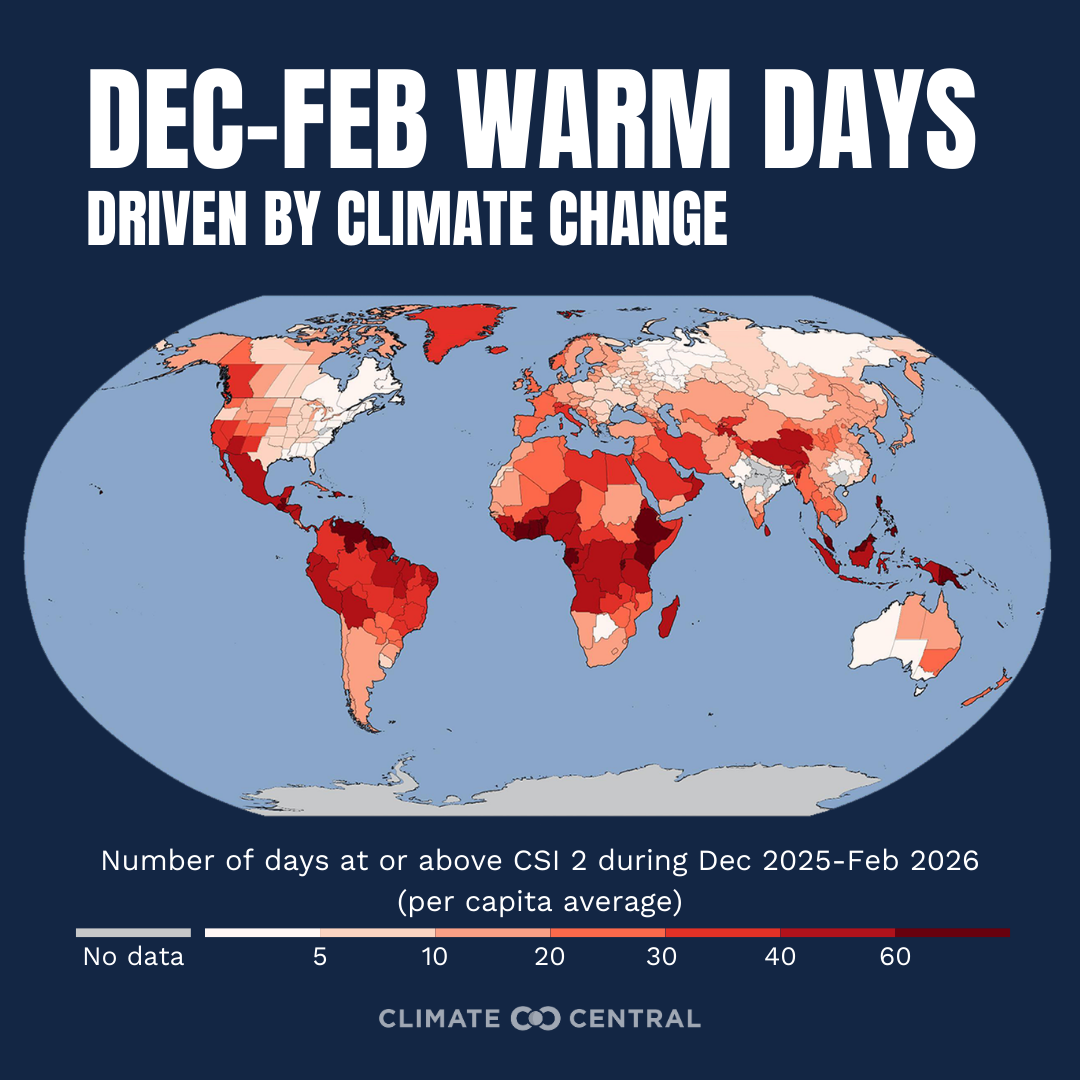
Every day from December 2025 to February 2026, more than one in six people on the planet experienced temperatures with a strong climate change influence.

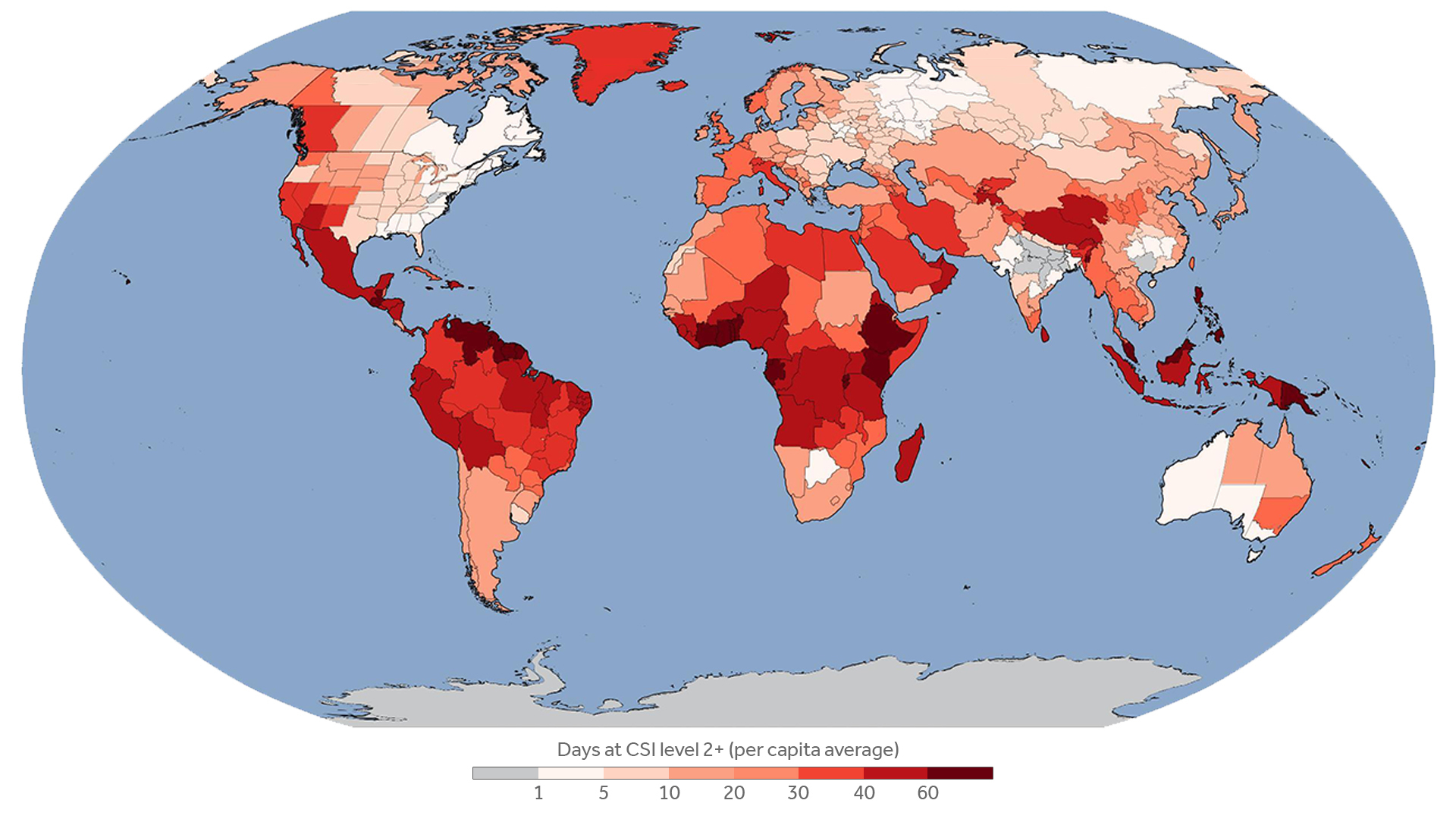
In 124 countries (home to nearly 2.5 billion people), the average person experienced at least 30 days with temperatures strongly influenced by climate change.

In 45 countries, all of the risky heat days in the past three months were driven by climate change.

Nearly 228 million people experienced 30 days or more of risky heat added by climate change during the last three months, and most of these people (81%) live in Africa.

In 54 U.S. cities, mostly in the western U.S., the average person experienced at least two weeks' worth of temperatures made at least two times more likely by climate change.

Graphic —  Dec 2025-Feb 2026 Seasonal Retro — Global map
For questions, or to request an interview with a Climate Central scientist, please contact Abbie Veitch at at aveitch@climatecentral.org.
Dec 2025-Feb 2026 Seasonal Retro — Days above CSI2

Dec-Feb Warm Days Driven by Climate Change

Number of days at or above CSI 2 during Dec 2025 - Feb 2026 (per capita average)

Download
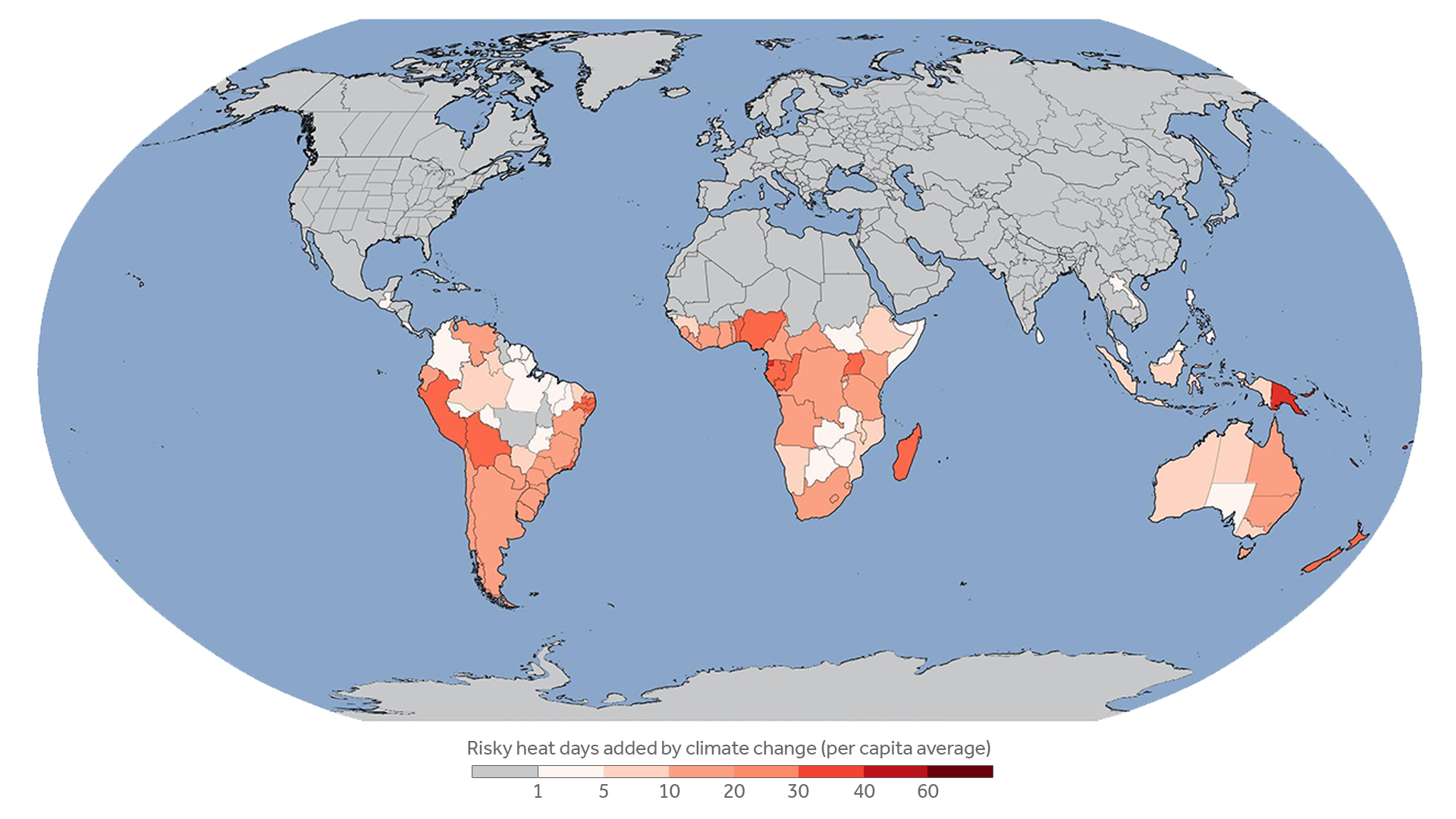
Dec 2025-Feb 2026 Seasonal Retro — Risky days added by climate change

Dec-Feb Risky Heat Days Added by Climate Change

Number of risky heat days during Dec 2025 - Feb 2026 (per capita average)

Download
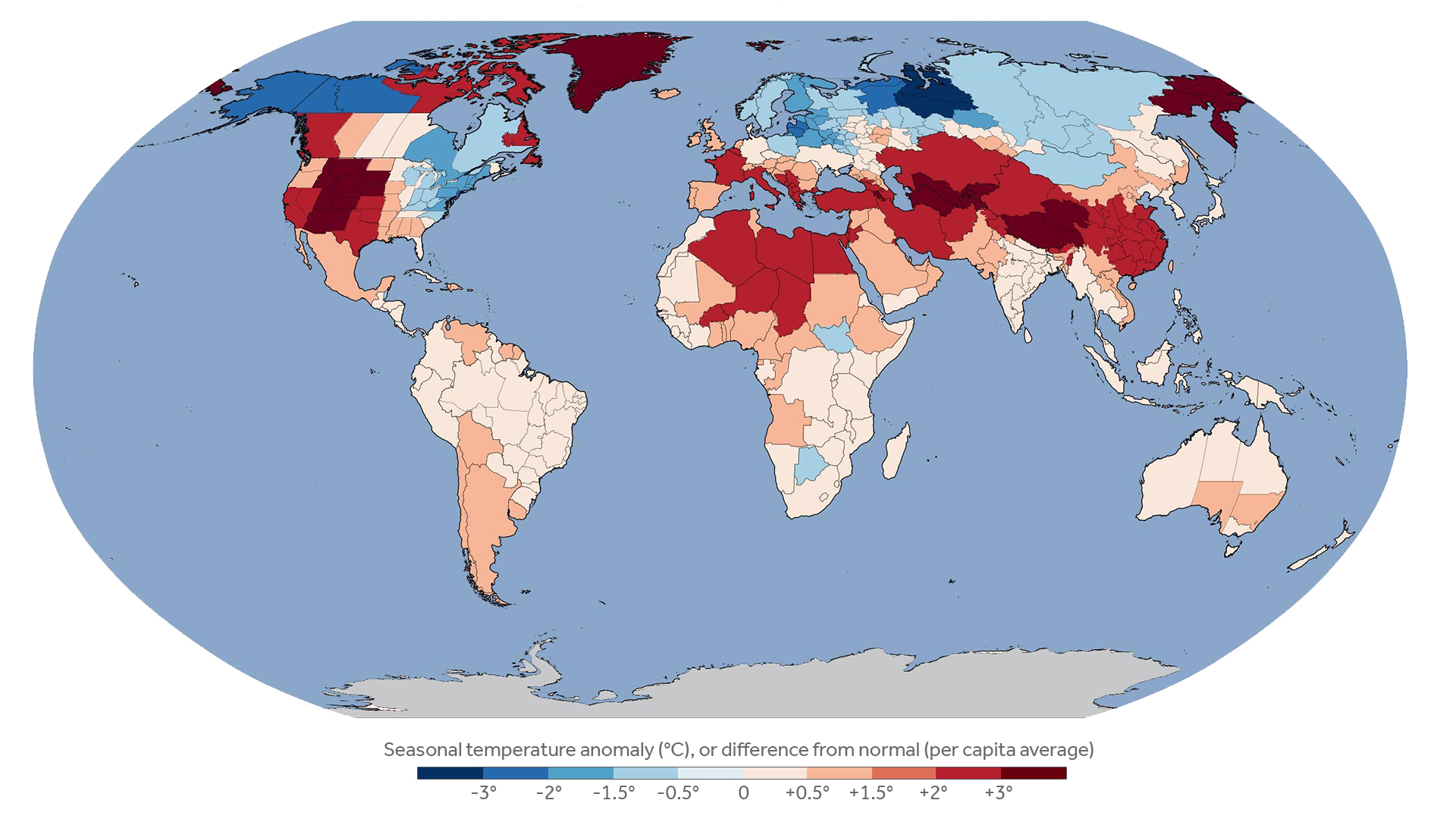
Dec 2025-Feb 2026 Seasonal Retro — Temp departure from normal

Dec-Feb Temperature Departure from Normal

Seasonal temperature anomaly (°C), or difference from normal (per capita average)

Download
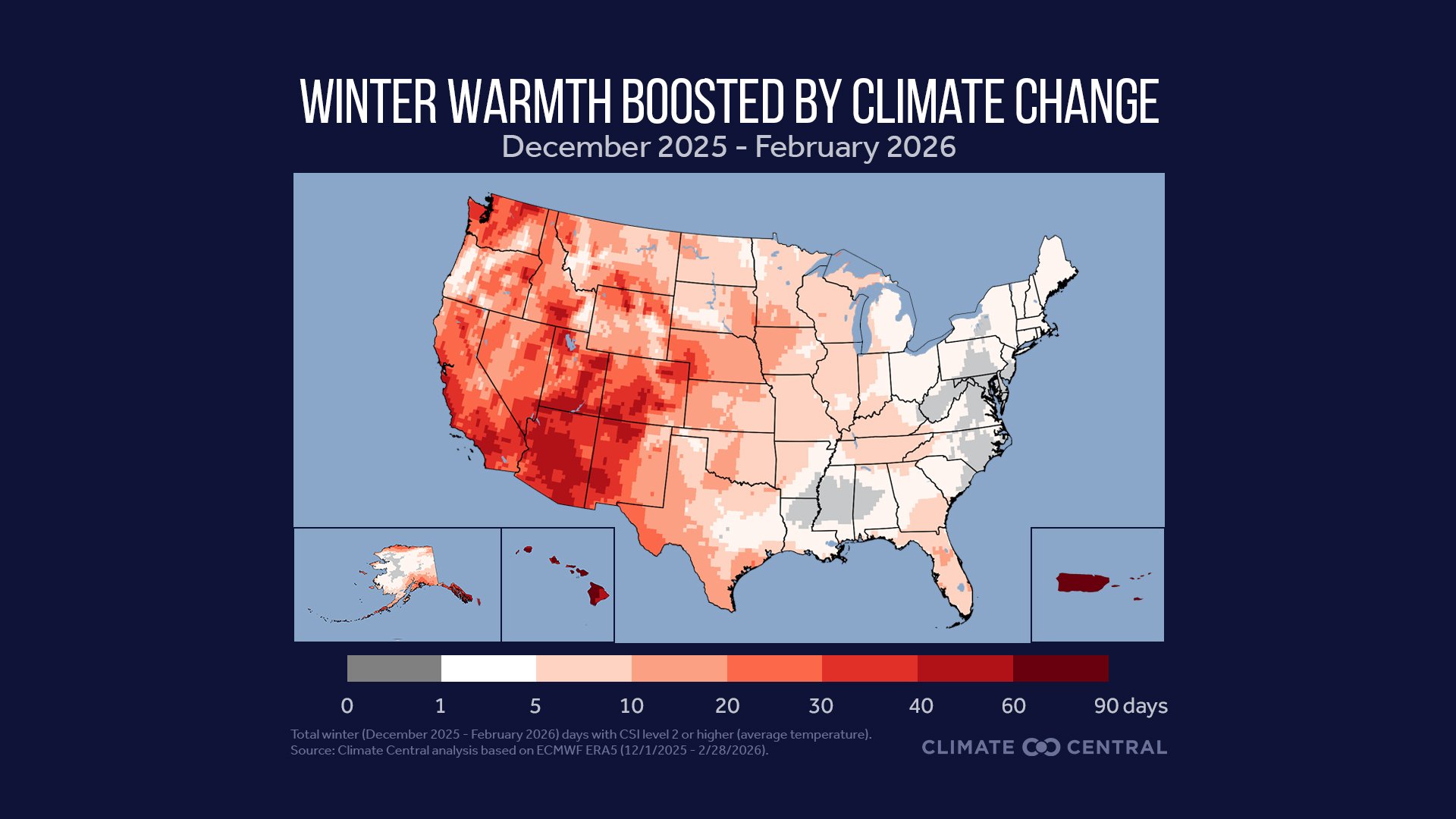
Graphic_Dec 2025-Feb 2026 Seasonal Retro_US Map_Days above CSI2-1

U.S. Winter Warmth Boosted by Climate Change

Total winter days (Dec 2025 - Feb 2026) with a Climate Shift Index level 2 or higher

Download
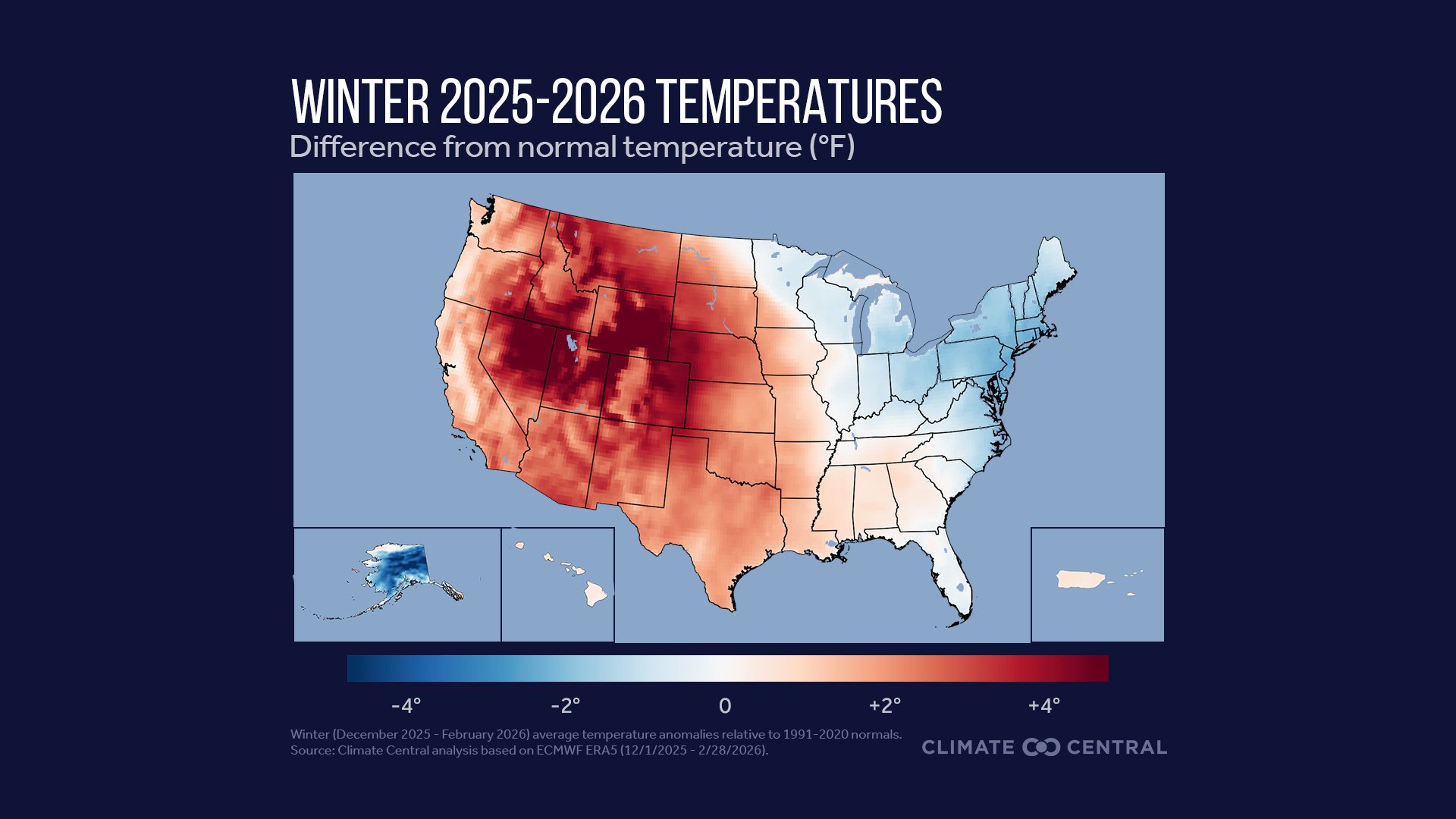
Graphic_Dec 2025-Feb 2026 Seasonal Retro_US Map_TemperatureDeparture-1

U.S. Dec-Feb Temperature Departure from Normal

Winter (December 2025 - February 2026) average temperature anomalies relative to 1991-2000 normals.

Download
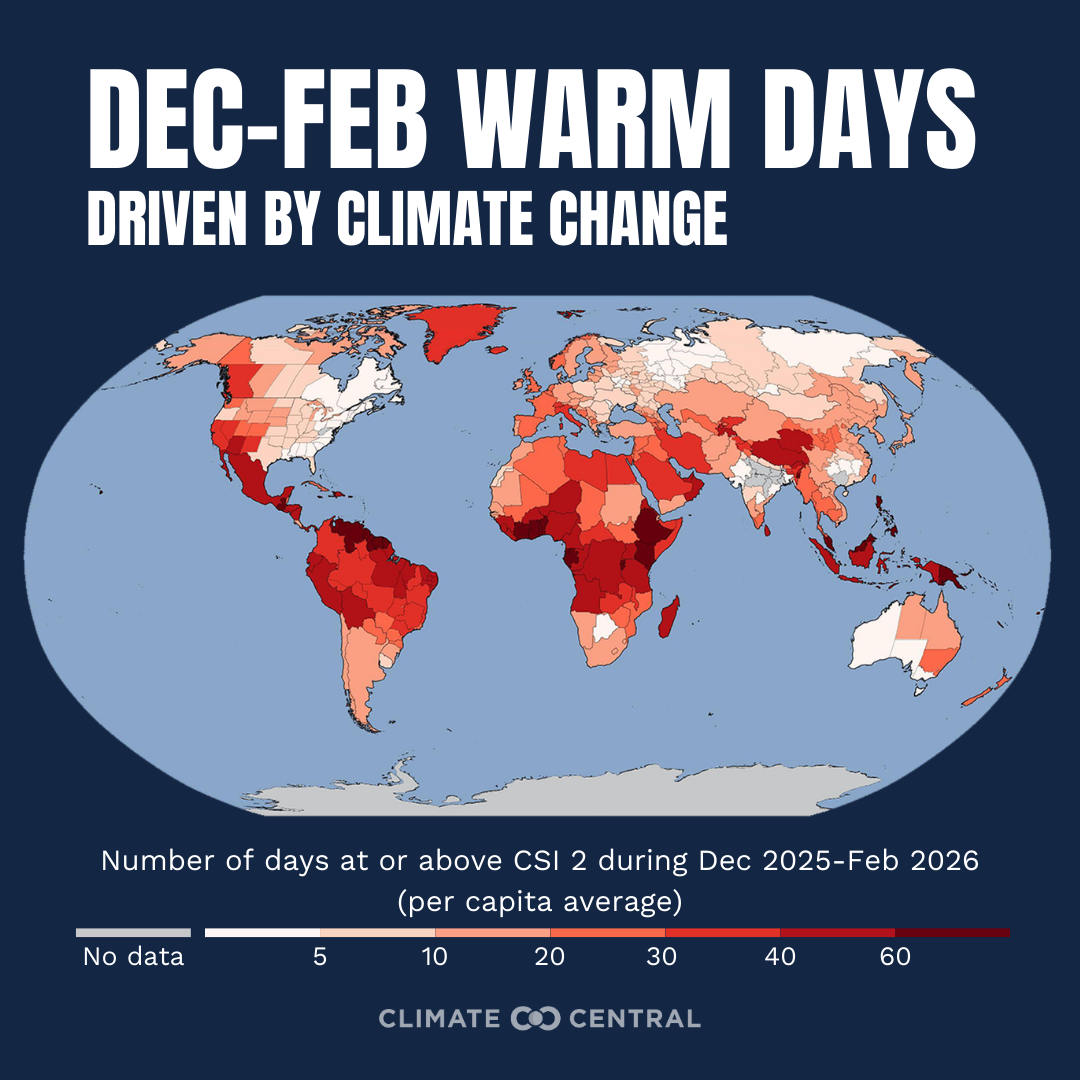
Graphic —  Dec 2025-Feb 2026 Seasonal Retro — Global map

Shareable Social Graphic

Dec-Feb warm days driven by climate change

Download
EMBARGOED UNTIL: Wednesday, March 18, 2026 @ 12 AM ET, 5 AM CET

Video Downloads

Need an expert for your storytelling?

Free, downloadable, ready-to-air/publish video soundbites that offer expert insight you can cite or include alongside coverage of the report (Featuring: Shel Winkley, Meteorologist — Climate Central) 

  • Download → 16:9 Broadcast Ready
  • Download → 9:16 Digital Content Ready
  • Copy → Script/Closed Captioning

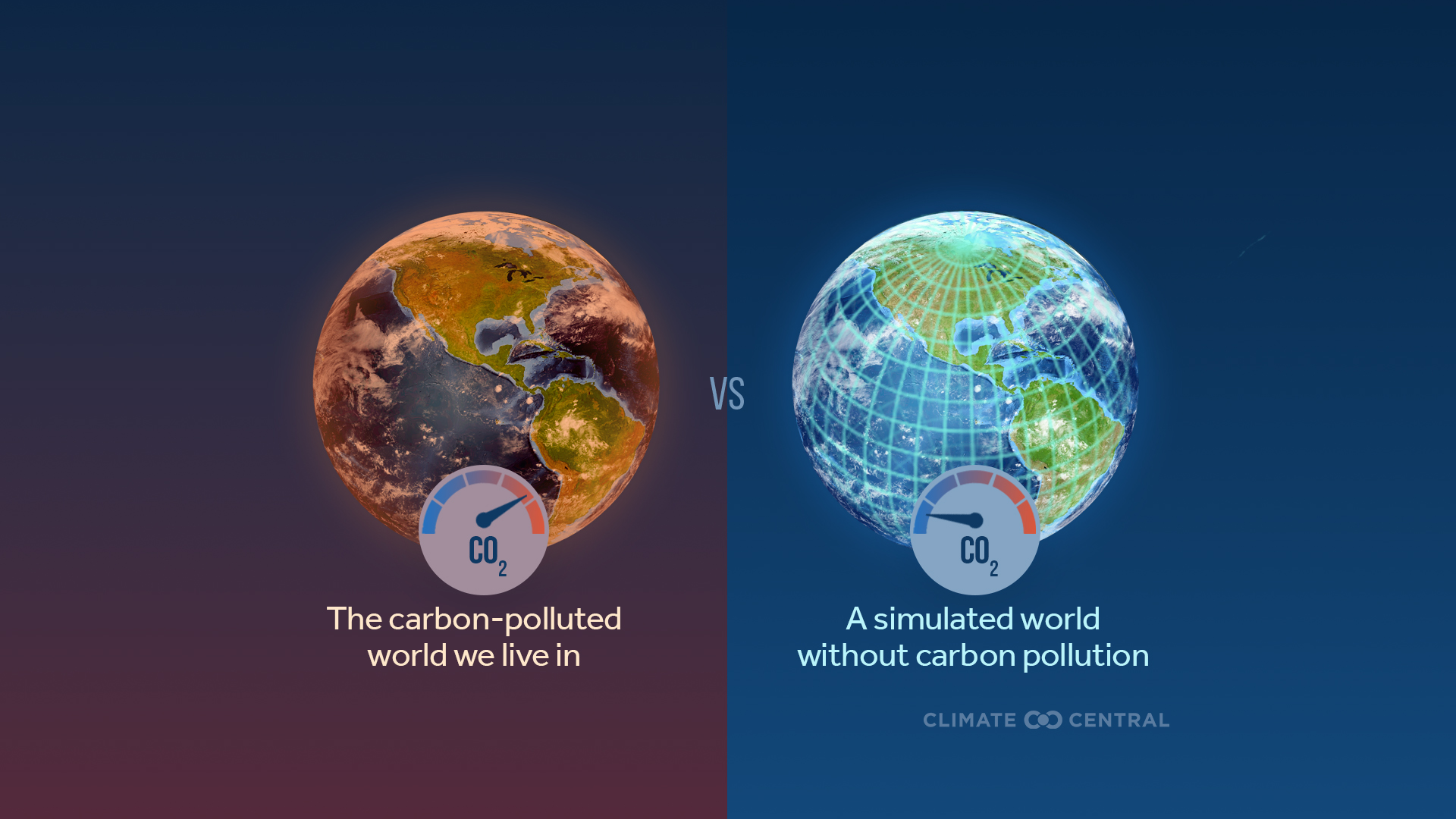
2025AttributionBasics_2Worlds_en_notitle_lg

Learn More About Attribution Science in Two Minutes

Attribution science helps measure how much more likely, frequent, or intense specific weather events are because of heat-trapping pollution.

Climate Central is an independent group of scientists and communicators who research and report the facts about our changing climate and how it affects people’s lives. Climate Central is a policy-neutral 501(c)(3) nonprofit.

Resources for telling the climate stories important in your community

